DAY 75 TO 76: CAPE FANSHAW TO SAND BAY
28th July 2023
Day 76: Point Hobart to Sand Bay
Saturday 22nd July
18nm
Part of this challenge that breeds so much enjoyment is the wildlife. From the early squawking ravens and pestering black flies to the magnificent presence of a variety of predators and aquatic life. We have been fortunate to see a phenomenal range of what British Columbia and Alaska can offer. The seals have entertained us with their daily inquisition. Sleeping sea lions on the surface of the water, suddenly shocked as we paddle by, with almost human expression on their faces. Shortly after departing Point Hobart, a sea lion followed me for a mile or so, almost silently, making me ask myself what he was thinking. By all accounts these are relatively simple creatures which weigh up to a ton. The thought of this beast attempting to make my kayak it’s girlfriend definitely crossed my mind. Can’t blame him, those eyes aren’t painted on.
As we proceeded north the current started to work against us. This isn’t too much of a problem as we can glide these heavy kayaks through a light current, but it’s slightly demoralising knowing the pace is slowing. Once the wind started to push us back we knew it was going to be a tough day. Your body acts like sail. The work rate instantly increases, consequently so must the food and water intake. It’s all too easy to try and keep the original pace but so important to slow it down with acceptance of the conditions.
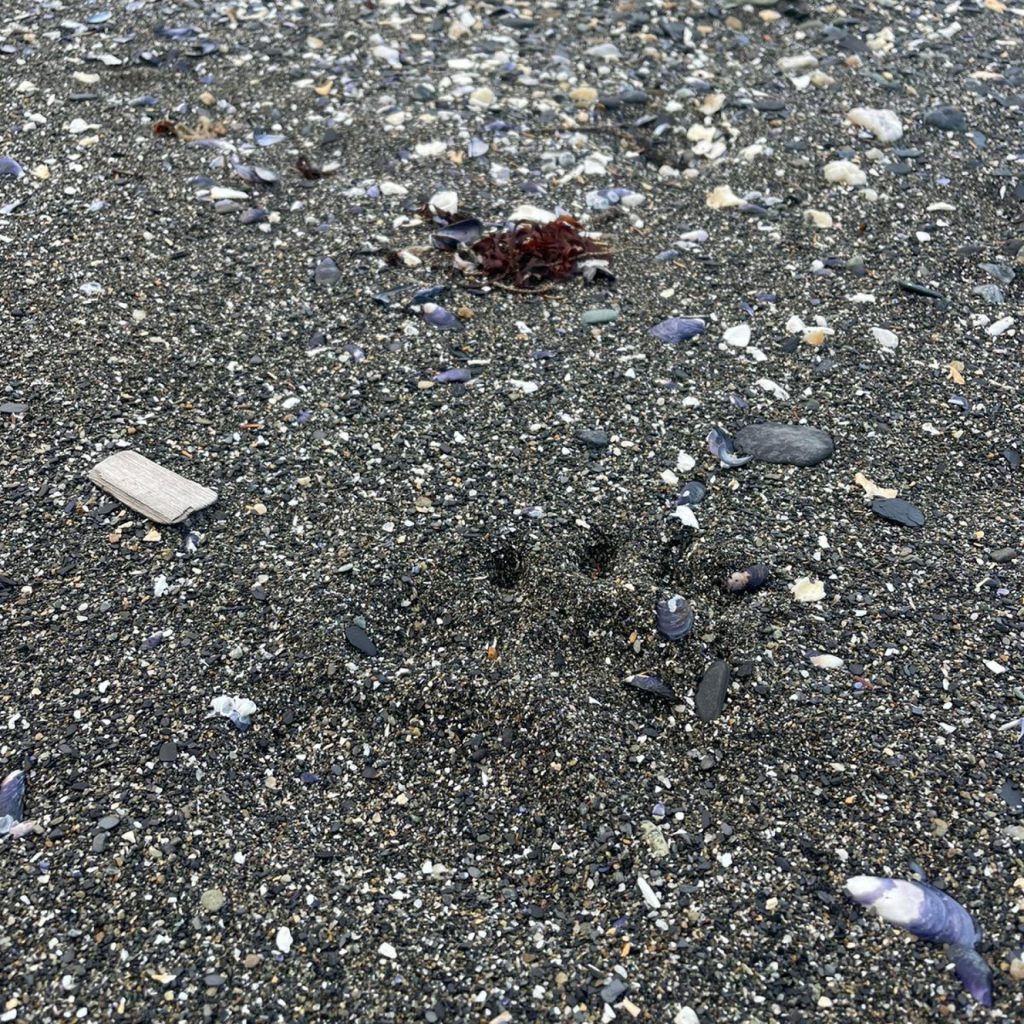
We eventually made camp at Sand Bay. There was clear evidence of bears in the area. Flattened water grass, paw prints and significant piles of dung. Our attitude toward these signs have toughened as time has passed. The first few instances were met with genuine concern and deliberation – do we stay or find another site? It’s easy to forget the basic principles when avoiding bears. If we keep to our procedures, we’ll be fine. Keep food away from the tents; brush teeth at the water’s edge. Either hang food and toiletries or seal them in the kayaks. If hanging these items, ensure the location is away from camp and definitely not between the camp and the boats. The noise of eight people is usually enough to deter any bear. Now we are only three, we have to be relentlessly strict as the further north we go, the chances of grizzly bear encounters increase.
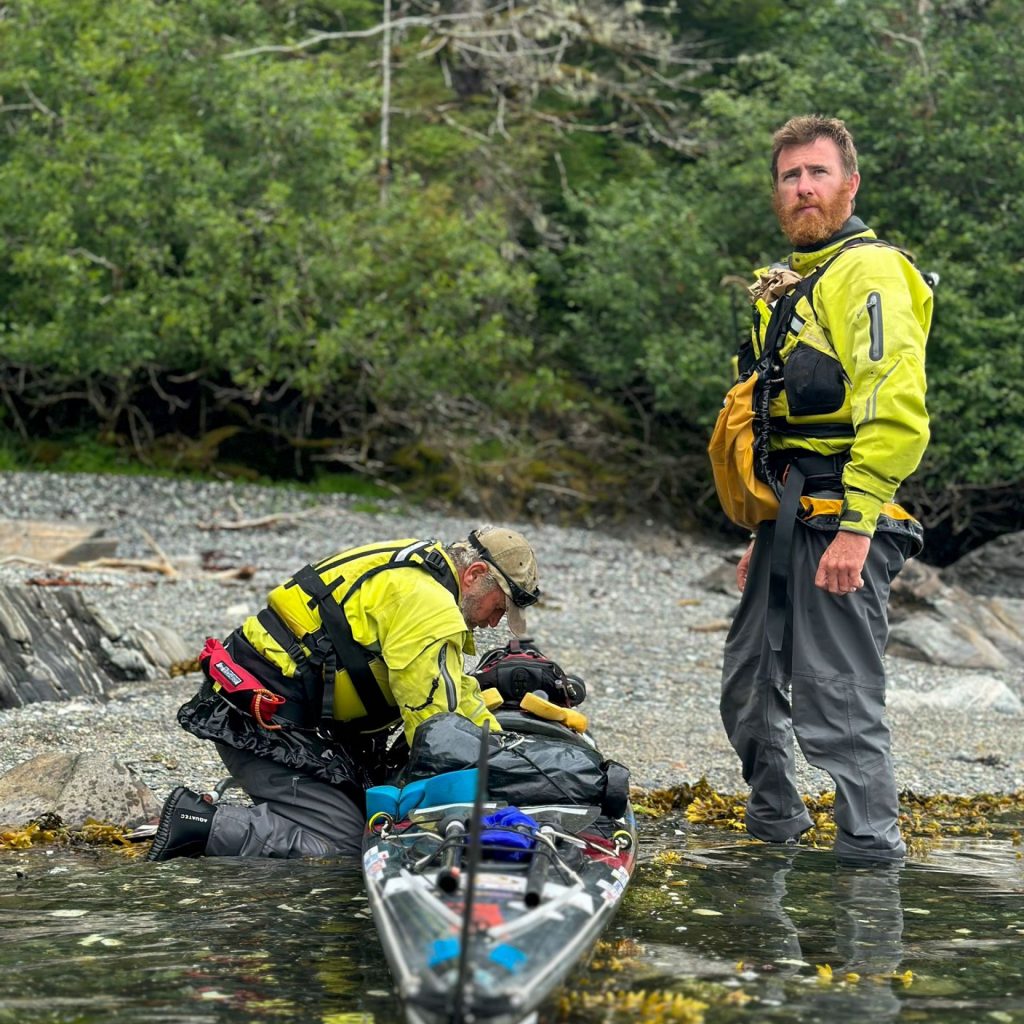
At the start of each day we work through a variety of topics: the route, weather, hazards for the day, tides – height, strength, direction, time. We are honest about pain and discomfort; defects on the kayaks and equipment. Depending on the severity of any damaged equipment, or indeed bodies, we either deal with it there and then or wait until we get to the resupply point. Before departing Sand Bay, I had a rip in my neck gasket. Marty’s wrist gasket had detached and Cayle’s wrist gasket was also damaged. When it comes to dry suits, there can’t be any messing about. Going for a swim would be guaranteed hypothermia. Unfortunately we couldn’t do anything about these gaskets so taped them up and planned to get to Juneau as quickly as possible.
Day 75: Cape Fanshaw to Point Hobart
Friday 21st July
18nm
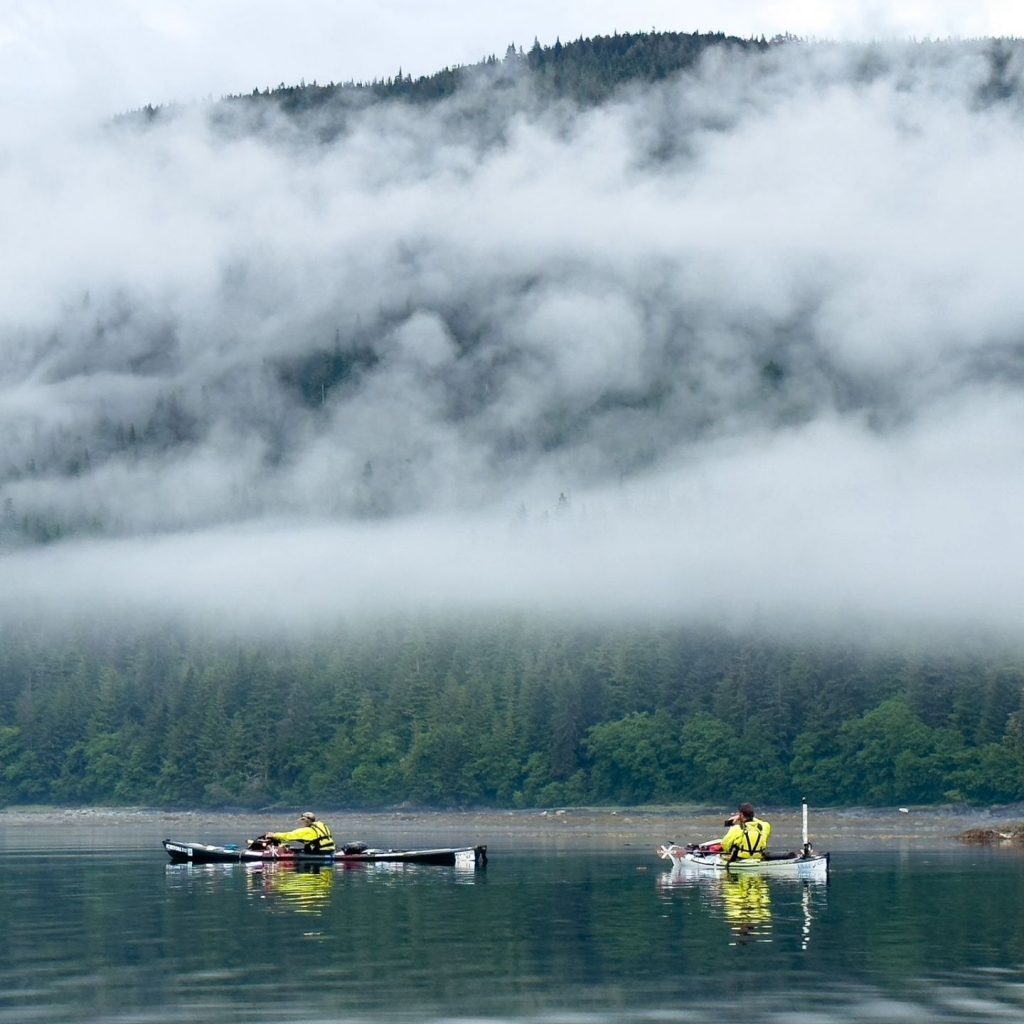
It was a wet start, yet again. Being wrapped up in a warm sleeping bag, lying on an inflated Thermarest mattress with rain tapping down hard on the shell of your tent, knowing you to have to slither into damp thermals and cold dry suit is not the greatest of motivations. The alarm went off at 0500 and I totally ignored it. After about 45 mins there was call to see if I was up. Although feeling guilty for over sleeping, the guys were very forgiving. We slid the boats down the short steep beach to the water relatively quickly. All night the whales had been working hard. It’s an extraordinary sound; when breaching, mouths wide open in anticipation of prey. I can only equate this orchestra to the sound effects in a cinema when colossal machinery is straining. A tremendous groan that vibrates through you.
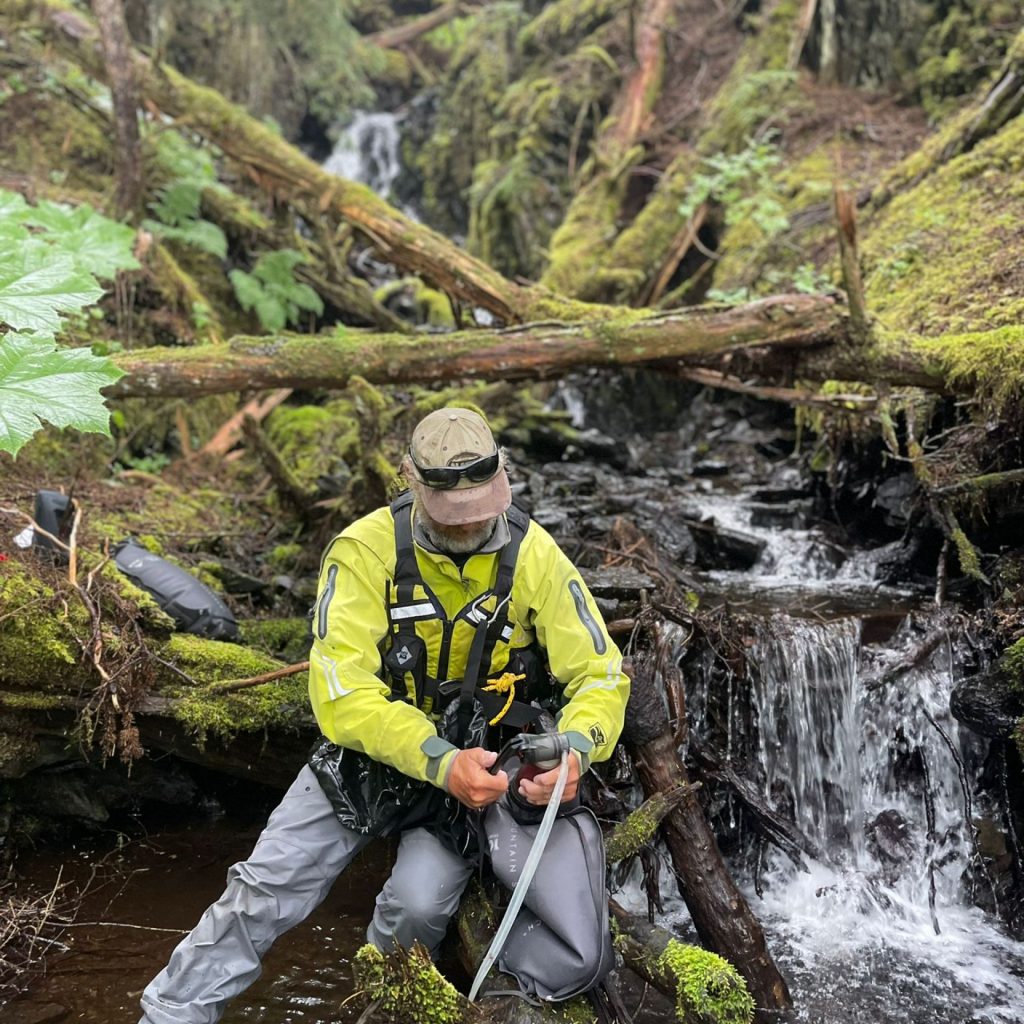
We aimed for Whitney Island where we located a stream so hopped out of the boats and filled our 10ltr water bladders. This is a lengthy process that requires a delicate hand when attaching the filter pump to the bladder. The pump produces about half a litre a minute and usually means sitting in a stream for a while pumping away. Marty and I took shifts, one on the pump, the other taking bear watch armed with bear spray and a bear banger. Eyes on the high ground above, eagerly awaiting movement in the undergrowth of the forest. A bear banger is a small but very effective device; it looks like a pen with a breach bolt running through the centre of it. You simply screw the explosive charge to the end, pull back the spring-loaded bolt and then release. Firing a projectile into the sky which, like a firework, explodes with an impressive bang. This obviously causes guaranteed amusement – it’s the simple things.
Pushing north we had beautiful conditions: no breeze, great visibility and a gentle current. Days like this will be how I want to remember this trip. The reality is something altogether different. Little did we know, the environment was going to test us in the coming days. As we approached Port Houghton – our next crossing – we spotted a massive exploration cruise ship, slowly gaining on us. Her anchor doors were open and she seemed to be slowing down in preparation to drop anchor. We moved away, turning the next corner to find a lunch spot. Even during a rest stop like lunch you have to be concentrating. Either because of a rising or falling tide, a huge wake from a cruise ship or just making sure you haven’t left anything loose on the deck which would get lost. Lunch done, we crossed the 3nm passage to Hobart Point. There is a significant difference in paddling along the shore in comparison to the open crossing. Being able to explore the hardest of terrains, cruise through kelp beds, seeing it either move with or against you and witness stunning wildlife going about its day is incredibly special, whereas plodding over a distance of between 2 and 5 nautical miles, not being able to see or feel the currents, open to the elements, can be really difficult. Using seaweed, flowing with the current, as a current indicator can either lift spirits or crush your very being: gliding over the top of it when it’s gently swaying with you compared to pushing your boat slowly passed it when headed into current.
We found a suitable beach and went about setting up camp. Ensuring a good campsite is usually done with tools in hand. How can we make this work? Digging out small boulder, cutting branches and shrubs away to eventually clear enough space for a body. It doesn’t necessarily need to be flat ground, simply comfortable. Once again, the wet kit was exchanged for the warm, dry comfortable clothes. This is one discipline considered one of the most important albeit easy to get right: if your dry kit gets wet, you will be miserable.