Day 73 TO 74: THOMAS BAY TO CAPE FANSHAW
26th July 2023
Day 74: Thomas Bay to Cape Fanshaw
Thursday 20th July
22 nautical miles
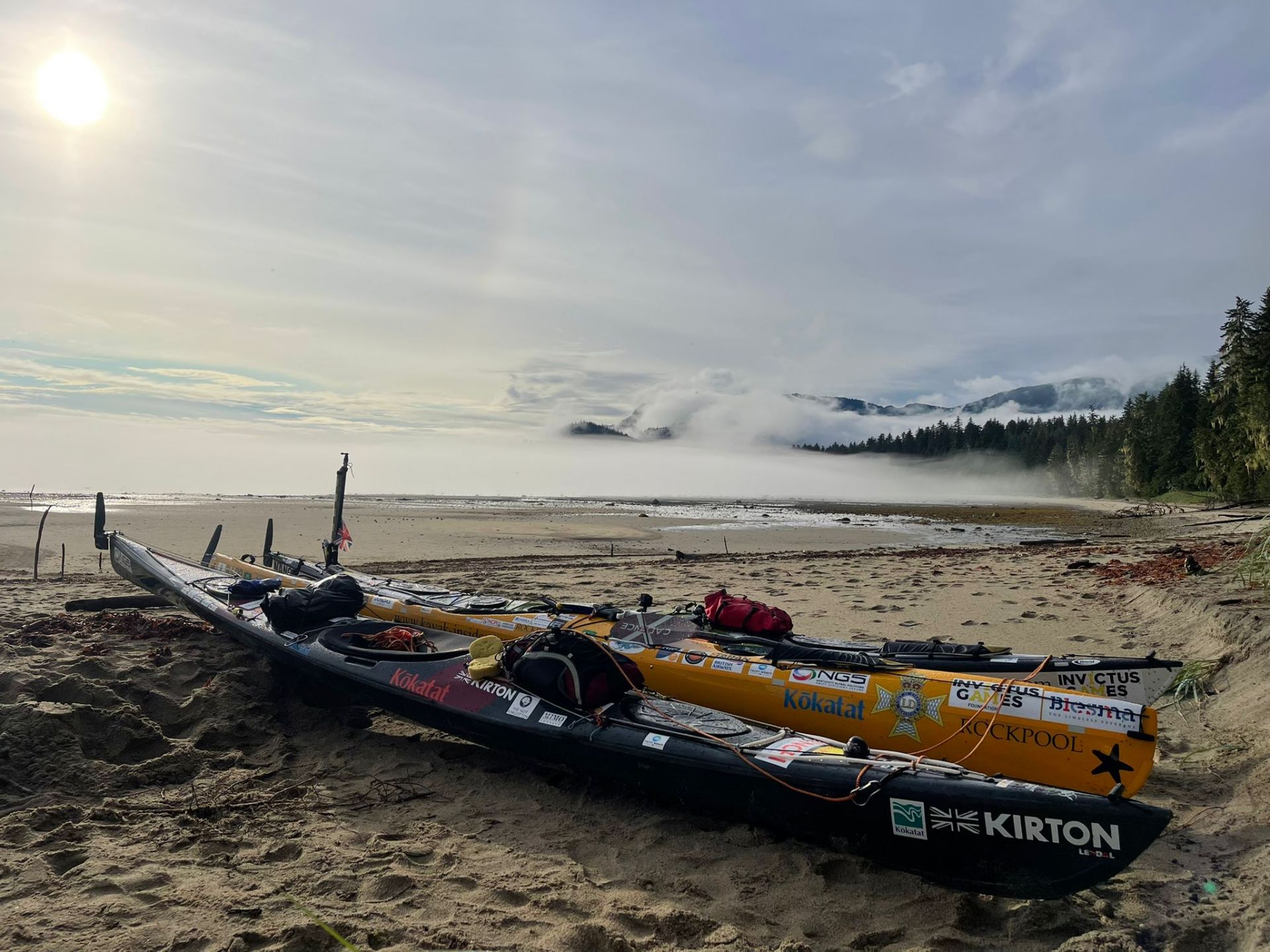
The plan was to wake at 4am to float the three boats, attaching them to a strong point whilst we collapsed camp and inhaled the usual mountain berry oats. To my delight, Marty had risen early and launched all three boats, leaving me to sip my coffee. I can’t lie, I approve of this arrangement. The impatience of the tide called us to a frantic start: taking shifts to slide the delicate vessels across sticky sand as the water ran away. A manic hour was spent fighting dry bags into hatches. Cayle was up to his vitals so boarded his kayak – known as Colonel Barb Mustard – and pushed off with haste.

During the mayhem, unbeknownst to Marty, a mischievous raccoon must have snuck up stealing one of his hatch covers, to only go and hide it on top of a mussle bed, hidden in plain view against the polished black shells. A quick scan of the now expansive beach, hatch cover located but remarkably no raccoon, sneaky little bastard! We met Cayle in deeper water, a few hundred meters from the shoreline and, taking breath, all taking note of each other’s efforts in getting through that pandemonium.
We headed west by north-west, quietly cutting through glassy water. Having not paddled the day before, we were keen to collect some miles. The trees standing over a rock wall as we passed by. The fog rising from the depths of the woods as if they were boiling, resulting in a low-level mist across the jungle that surrounded us. The steady flow from behind gave us the required assistance we needed to paddle the required distance. A few headlands ticked off the route, we jumped onto a nearby beach to devour snacks and coffee. A quick stretch and nav check. Around the corner sat Farragut Bay. Approximately 4nm from headland to headland – easy. Not as easy as we thought as it turns out. Today was a good example in comparing nautical navigation in to navigating on land. The tide moves up and down as well as side to side, the wind can stop you in your tracks and there is other traffic to contend with. On top of all that, there is a landscape below you, hidden from sight. This would all be easy to manoeuvre through, as we have done for the last two months, but there is one more contender in this fight that is easily forgotten: visibility. We set off from the beach with a large fog bank creeping towards us. It happily rolled over the three of us and sat comfortably until we completely lost all sight of land. We bunched up, checked our course and speed, verifying the time of departure from the beach. We knew the current was pushing us into the bay so heads stayed composed. I swung my compass, to double check I didn’t have any interference from the electronics in my boat, by altering course, port and then starboard. No movement. Not the result I wanted. I told Cayle who then took charge of holding the course. Like a couple of days before, there was the sound of moving water. With a visibility range of only 100 meters, it was impossible to know what was disturbing the water.

A minute passed, which felt like ten. The noise increased, joined with he humming of pistons and exhausts. To our 1 o’clock, appeared a 30ft motor vessel, on a collision course. She instantly stopped in her tracks within 300 meters of us, as if fearful of these three, bearded and burnt intrepid explorers. All parties made a bold alteration course to starboard to pass by on each other’s port side, sharing an acknowledging wave and a thumbs up across the water. We hit land 20 minutes later to find yet another suitable beach to land. Hours of flat undisturbed water took us along the untouched coast, guiding us to our campsite, Cape Fanshaw. We thought we had seen impressive landscapes along the route so far but were instantly blown away as we turned north around the Cape to witness Stephens Passage in all its glory. A short sharp carry of the boats at high tide boosted morale even more. The height of the coming evening’s tide was inspected, presenting the option to pitch the tents at the top of the stony beach, along a flat platform. Since our arrival, the sound of whales rising and dipping into the evening’s depths echoed from across this scene of mountainous terrain and treetopped islands, overseen by an extraordinary sunset. It has been, without doubt the best day of paddling.

Day 73: A Tactical rest day
We pondered how to use the height of tide to our advantage, launching with as much water as possible as a result of only two blokes carrying the kayaks. Unfortunately, high tide was around 3am so the decision was easy. Spend the day chilling on the beach and move the following morning.
For most of the day we watched fog bangs simultaneously roll over the water towards us, eventually covering the campsite with an immediate chill as the sun became hidden from sight.
Marty drove sticks into the sand, on the hour to mark the height of tide and the deepest route through the sand in preparation for the launch. As he said, it’s a Neanderthal method, and it worked beautifully. Typical Marty, always thinking ahead to help the team.